Discovery of the location of “the jogger’s mouth”
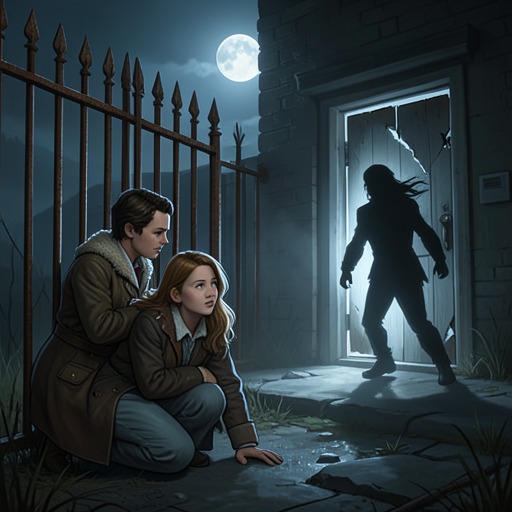
Turtles All the Way DownAza Holmes and Daisy Ramirez discover the location of “the jogger’s mouth” at the open, unfinished end of the Pogue’s Run tunnel, where a tiny stream of water falls toward the White River. The scene joins a physical revelation to a decision about what to do with it: once Aza understands that this is where Pogue’s Run ends, she and Daisy turn back toward the party and decide to tell Davis Pickett, but not to speak publicly about what they have found.
The approach to the tunnel
The discovery begins as an uncomfortable walk through the tunnel rather than a planned arrival at a clear landmark. The smell grows worse, carrying the character of rotting garbage and unflushed toilets. When the pair pass an offshoot, Daisy says she wants to turn around. Aza, however, sees a pinprick of gray light ahead and wants to find out what lies at the end. The competing impulses are plain: Daisy registers the tunnel as a place to leave, while Aza lets the distant light draw them onward.
As they continue, the sounds of the city grow louder and the smell eases with their approach to open air. The gray point expands until they reach the tunnel’s edge. The opening is not a completed outlet but an unfinished one: water that is supposed to be diverted from the White River instead drips down into it, two stories below. That failed or incomplete infrastructure gives the discovery its particular setting. The place is at once a hidden passage, a work left unfinished, and a point where the intended diversion of water does not occur.
A view from an unexpected place
At the edge, Aza looks up and finds Indianapolis startlingly bright although it is past ten at night. She takes in details at several distances: moss on the boulders below, frothy bubbles at the foot of a waterfall, trees bent over the water, power lines spanning the river, a silver grain mill, and neon signs for Speedway and Chase Bank. The scene pauses the forward movement of the search. Before the pair can name the location, the city presents itself as a view Aza has never had from its usually flat terrain.
That pause makes the tunnel’s setting more than a route to an answer. The view comes from a place associated with foul water and unfinished public works, not from a conventional overlook. Aza briefly has to remember that the silver-lit landscape is nighttime darkness aboveground. Meanwhile, she and Daisy discuss the possibility that the tunnel could be cleaner in ten or twenty years. Aza says she hopes it will remain accessible to them; Daisy answers with a pointed reference to Russell Pickett’s corruption and incompetence. Their exchange ties the beauty of the hidden view to the degraded water and the unfinished project, without making the view a resolution of those conditions.
Recognizing the mouth
The decisive turn arrives when Aza asks where Pogue’s Run starts and where its mouth is. Daisy corrects the direction embedded in the question: a river’s mouth is where it ends, not where it begins. She identifies their position as that mouth, and Aza recognizes the significance for the search: “Pogue’s Run. Holy shit, Holmesy. We’re in the jogger’s mouth.” The place they have reached is not merely a tunnel endpoint; it is the geographic answer their phrase has been pointing toward.
Recognition changes the atmosphere immediately. Aza stands and feels, for no stated reason, as though Pickett could be behind them and might push them from the tunnel’s edge into the river. She admits that she is now frightened. The discovery therefore does not provide safety or certainty about whether Pickett is present. It gives them a location, while leaving his whereabouts unresolved; Daisy asks whether he is down there, and Aza says she does not know and does not think it is theirs to know.
What they do with the discovery
Aza’s response is to limit their next steps. She tells Daisy they will turn around, return to the party, spend time with the art crowd, and get home by curfew. She will tell Davis so that he knows, and let him decide whether to tell Noah Pickett. Beyond that, she says, they will not say a word. Daisy agrees and hurries to catch up as Aza starts back toward the distant music.
The ending keeps the discovery consequential but bounded. Aza and Daisy have found the location, yet they do not pursue Pickett into the tunnel or claim to know whether he is there. Instead, they pass the information to Davis and leave the decision about involving Noah to him. The event thus moves their investigation from searching for a place to recognizing it, but closes on restraint: the mouth has been found, while the person and the implications of his possible presence remain uncertain.